
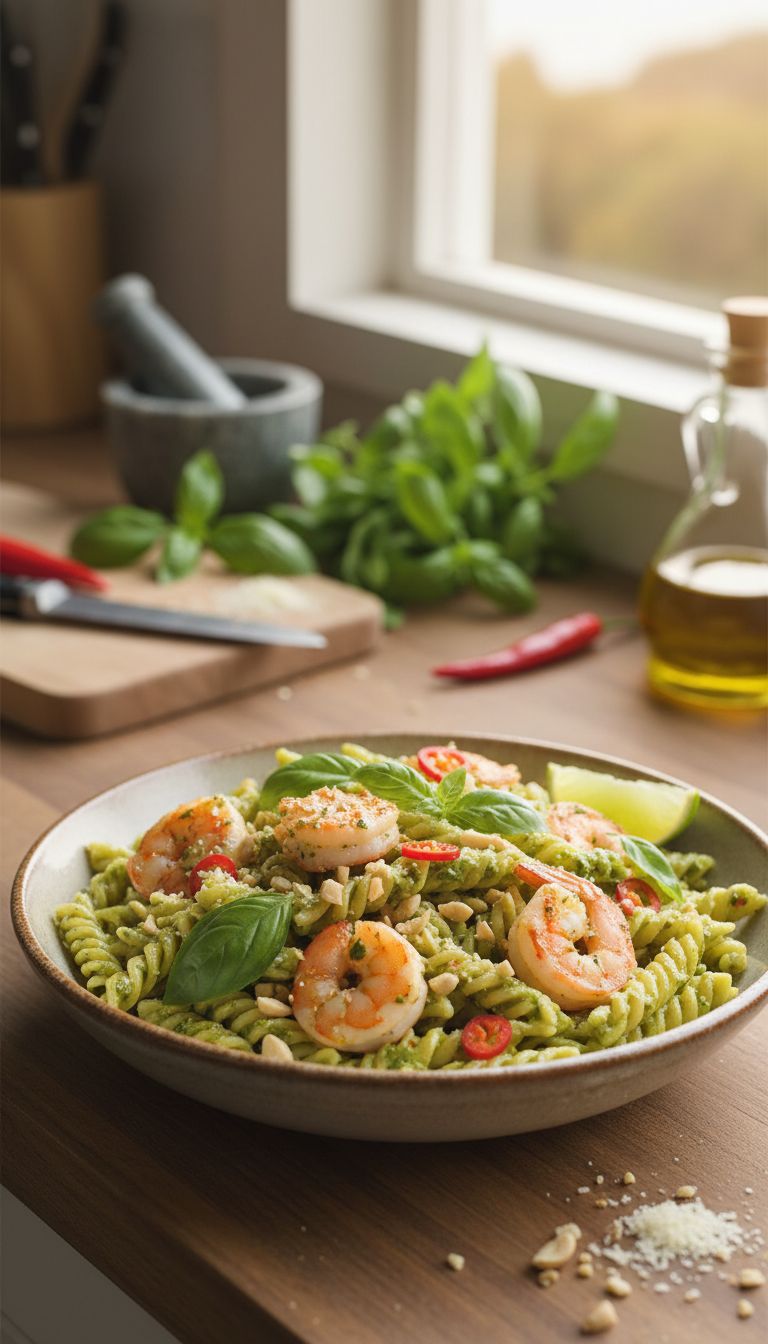
Thai Shrimp Basil Pesto Pasta – Easy Weeknight Recipe with Fresh Flavor
If you like the comfort of a big bowl of pasta but also crave bright, fresh flavors, this Thai Shrimp Basil Pesto Pasta sits right in that sweet spot. It takes the familiar idea of basil pesto and nudges it toward Thai-style seasoning with lime, fish sauce, cilantro, and a gentle kick of chili. The result is a simple, weeknight-friendly dish that tastes like something you might order at a cozy little fusion spot, but it comes together at home in under an hour.
The base is straightforward: al dente spaghetti or linguine, tender shrimp, and a homemade basil-cilantro pesto. Nothing fancy or complicated, just good ingredients doing their thing. The pesto clings to the noodles, the shrimp soak up the garlicky pan juices, and that little splash of lime keeps everything from feeling heavy. It is the kind of dinner you can throw together after work without needing a dozen specialty items, yet it still feels a bit special when you sit down to eat.
Ingredients for this Thai Shrimp Basil Pesto Pasta
Before you start cooking, it helps to have everything laid out. This recipe keeps the ingredient list focused, so you are not juggling too many things at once.
- Spaghetti or linguine (12 oz) – The foundation of the dish. Either shape works well, as long as you cook it until just al dente.
- Large shrimp (1 lb), peeled and deveined – Shrimp cook quickly and add plenty of protein without weighing the dish down.
- Olive oil (2 tbsp) – For sautéing the shrimp and garlic, giving them a mellow, savory base.
- Unsalted butter (1 tbsp) – Adds a touch of richness to the shrimp and helps carry the garlic flavor.
- Garlic, minced (3 cloves) – Briefly sautéed so it turns fragrant and sweet, not bitter.
- Fresh basil leaves (1 cup, lightly packed) – The main herb in the pesto, bringing that classic aromatic flavor.
- Fresh cilantro leaves (1/2 cup, lightly packed) – Adds a fresh, slightly citrusy note that leans into Thai-style flavors.
- Roasted unsalted cashews (1/4 cup) – These stand in for traditional pine nuts, adding a gentle crunch and creamy body to the pesto.
- Red chili, seeded and chopped (1 small) – Brings a mild heat. You can taste as you go and keep it gentle.
- Fish sauce (1 tbsp) – A small amount gives the pesto depth and a savory backbone.
- Lime juice, freshly squeezed (2 tbsp) – Brightens the whole sauce and keeps the flavors lively.
- Extra-virgin olive oil (1/3 cup) – Blends the pesto into a smooth, spoonable sauce.
- Grated Parmesan cheese (1/4 cup) – Adds saltiness and body to the pesto, helping it cling to the pasta.
- Salt (1/4 tsp, or to taste) – To season the pesto, the shrimp, and the pasta water.
- Black pepper (1/4 tsp, or to taste) – For a mild, warm bite throughout the dish.
- Reserved pasta cooking water (1/4 cup) – Helps loosen the pesto and bind it to the noodles without making the sauce thin.
- Fresh basil, sliced (2 tbsp), for garnish – A final sprinkle of freshness on top right before serving.
Instructions
Think of this Thai Shrimp Basil Pesto Pasta as three small tasks: cooking the pasta, making the pesto, and quickly sautéing the shrimp. Once those are done, everything comes together in one pan.
- Cook the pasta. Bring a large pot of salted water to a boil and cook the spaghetti or linguine according to package directions until al dente. You want it cooked through but still with a bit of bite.
- Save some pasta water. Before draining the pasta, scoop out about 1/4 cup of the starchy cooking water and set it aside. Then drain the pasta well so it does not carry too much extra water into the skillet.
- Start the pesto base. While the pasta cooks, add the fresh basil leaves, cilantro leaves, roasted unsalted cashews, red chili, fish sauce, lime juice, extra-virgin olive oil, and grated Parmesan cheese to a food processor.
- Blend the pesto. Pulse the mixture until it forms a thick, fairly smooth pesto. Scrape down the sides if needed so everything blends evenly and you do not end up with big pieces of cashew or herbs.
- Season the pesto. Taste the pesto and season with salt and black pepper. Blend again briefly just to mix in the seasoning, then set the pesto aside while you cook the shrimp.
- Season the shrimp. Pat the peeled and deveined shrimp dry with paper towels. Sprinkle them lightly with a pinch of salt and black pepper so they are seasoned before they hit the pan.
- Heat the pan. In a large skillet, heat the olive oil and unsalted butter over medium-high heat until the butter melts and the mixture is hot but not smoking.
- Cook the garlic. Add the minced garlic to the skillet and cook for about 30 seconds, stirring constantly. You just want it fragrant; if it starts to brown, lower the heat a touch.
- Sauté the shrimp. Add the seasoned shrimp to the skillet in a single layer. Cook for 2 to 3 minutes per side, until the shrimp are opaque and just cooked through. As soon as they are done, remove the skillet from the heat so they do not overcook.
- Add the pasta. Tip the drained pasta into the skillet with the cooked shrimp and garlic. Toss gently so the noodles pick up some of those pan juices.
- Stir in the pesto. Spoon the basil-cilantro pesto over the pasta and shrimp. Use tongs to toss until the noodles are evenly coated and the shrimp are nestled through the pasta.
- Adjust the sauce. Drizzle in a little of the reserved pasta cooking water, a tablespoon at a time, tossing until the sauce loosens slightly and clings to the pasta without pooling at the bottom of the pan.
- Taste and tweak. Taste the Thai Shrimp Basil Pesto Pasta and adjust the seasoning with a bit more salt or black pepper if needed. Different brands of fish sauce and Parmesan can change the saltiness, so it is worth a final check.
- Serve and garnish. Divide the pasta among plates and top with the sliced fresh basil for garnish. Serve hot while the shrimp are still juicy and the pesto is fragrant.
Cook and Prep Times
- Prep time: 20 minutes
- Cook time: 20 minutes
- Total time: About 40 minutes
- Servings: 4
Nutritional information
The values below are an estimate for one serving of this Thai Shrimp Basil Pesto Pasta when the recipe is divided into four portions. It is meant as a general guide rather than an exact medical calculation.
- Calories: 610 kcal
- Carbohydrates: 56g
- Protein: 34g
- Total fat: 26g
- Saturated fat: 6g
- Sodium: 740mg
- Fiber: 3g
- Sugar: 2g
Between the shrimp, Parmesan, olive oil, and nuts, this dish is satisfying without feeling overly heavy. If you prefer a lighter plate, you can simply serve yourself a smaller portion of pasta and add a big side salad.
Frequently asked questions
Can I make the pesto ahead of time?
Yes, you can prepare the basil-cilantro pesto ahead of time to make this Thai Shrimp Basil Pesto Pasta even easier on a busy night. Blend the fresh basil leaves, cilantro leaves, roasted unsalted cashews, red chili, fish sauce, lime juice, extra-virgin olive oil, grated Parmesan cheese, salt, and black pepper as directed. Store the pesto in an airtight container in the refrigerator for up to two days. When you are ready to cook, bring it closer to room temperature before tossing it with the hot pasta, shrimp, and a splash of reserved pasta cooking water so it loosens nicely.
What if I do not like a lot of spice?
If you are sensitive to heat, you can easily tone this recipe down. The red chili is where the gentle kick comes from, so you can either use a smaller amount, make sure it is well seeded, or simply leave it out. The rest of the flavors in the Thai Shrimp Basil Pesto Pasta—the basil, cilantro, fish sauce, lime juice, and Parmesan—still give you plenty of character even without much chili. You can always add a small amount to the food processor, taste the pesto, and decide if you want more.
How can I store leftovers?
Leftover Thai Shrimp Basil Pesto Pasta keeps reasonably well for the next day. Let the pasta cool to room temperature, then transfer it to an airtight container and refrigerate. It is best eaten within 1 to 2 days so the shrimp stay tender. To reheat, warm it gently in a skillet over low to medium heat with a small splash of water to help loosen the pesto again. Stir just until heated through; avoid cooking it too long so the shrimp do not turn rubbery.

Thai Shrimp Basil Pesto Pasta
Ingredients
- 12 oz spaghetti or linguine
- 1 lb large shrimp, peeled and deveined
- 2 tbsp olive oil
- 1 tbsp unsalted butter
- 3 cloves garlic, minced
- 1 cup fresh basil leaves, lightly packed
- 1/2 cup fresh cilantro leaves, lightly packed
- 1/4 cup roasted unsalted cashews
- 1 small red chili, seeded and chopped
- 1 tbsp fish sauce
- 2 tbsp lime juice, freshly squeezed
- 1/3 cup extra-virgin olive oil
- 1/4 cup grated Parmesan cheese
- 1/4 tsp salt, or to taste
- 1/4 tsp black pepper, or to taste
- 1/4 cup reserved pasta cooking water
- 2 tbsp fresh basil, sliced, for garnish
Instructions
- Bring a large pot of salted water to a boil and cook the spaghetti or linguine according to package directions until al dente.
- Before draining the pasta, scoop out about 1/4 cup of the starchy cooking water and set it aside, then drain the pasta well.
- While the pasta cooks, add the fresh basil leaves, cilantro leaves, roasted unsalted cashews, red chili, fish sauce, lime juice, extra-virgin olive oil, and grated Parmesan cheese to a food processor.
- Pulse the mixture in the food processor until it forms a thick, fairly smooth pesto, scraping down the sides as needed.
- Taste the pesto and season with salt and black pepper, blending again briefly to combine, then set the pesto aside.
- Pat the peeled and deveined shrimp dry with paper towels, then season them lightly with a pinch of salt and black pepper.
- Heat the olive oil and unsalted butter in a large skillet over medium-high heat until the butter is melted and the mixture is hot but not smoking.
- Add the minced garlic to the skillet and cook for about 30 seconds, stirring constantly, until fragrant but not browned.
- Add the seasoned shrimp to the skillet in a single layer and cook for 2 to 3 minutes per side, until the shrimp are opaque and just cooked through, then remove the skillet from the heat.
- Add the drained pasta to the skillet with the cooked shrimp and garlic, tossing gently to combine everything.
- Spoon the basil-cilantro pesto over the pasta and shrimp, tossing until the noodles are evenly coated.
- Drizzle in a little of the reserved pasta cooking water, a tablespoon at a time, tossing until the sauce loosens slightly and clings to the pasta.
- Taste the Thai Shrimp Basil Pesto Pasta and adjust the seasoning with a bit more salt or black pepper if needed.
- Serve the pasta hot, topped with the sliced fresh basil for garnish.


